Rocking Horse Publishing


The other day, I asked a publisher friend of mine WHY she hadn’t warned me about this publishing business thingy. Her answer: misery loves company. Of course, she added a few “hahahas.”

Sigh.

So here’s the short version:

Many of you know that self-publishing, or SP, still operates under a stigma of sorts. Not from readers – they probably couldn’t tell you “who” published their favorite books. Amazon certainly doesn’t care, ha, neither do Kobo or B&N online. Now, getting your SP books on the shelves at B&N, that’s another topic altogether.

The problem is booksellers. Most booksellers. They claim bad writing, poor grammar, nonexistent editing, lousy covers, etc. And sure, some SP books have all these issues – maybe even most of them. And booksellers simply don’t have time to vet every SP book that comes across their counters, which means they can’t recommend them and, therefore, won’t often try to sell them.

Well, I thought, I can solve that – I started a publishing company. Now, SP authors can pretty much say their books are published by _________ and get away with it – unless they run up against a savvy bookseller who does some checking. Not many do, but it’s really simple. If you Google a “publisher” and it comes up showing the author as owner and ESPECIALLY if they’ve only published the author’s books, well, it’s an SP book.

Knowing all of this, I went the legit route – we already had a SAN, thanks to the bookstore, so it was simple to create an imprint and put out a call for submissions. We received quite a few since we started the publishing house, and we’ve chosen two so far with a third being announced in the next couple weeks. We plan to put out print and e-books of just six titles this year, more than likely increasing that in 2014. But here’s the BIG announcement:

SEVEN DIRTY WORDS, a contemporary romance by CHARLOTTE HOWARD, is being launched next Tuesday, January 29!

Let me show you the process that Charlotte’s book went through, which of course is the same process for all of RHP’s books:

First, the submission. The ms is read by at least two beta readers who give their recommendations – whether they like the story or not. Then we make a decision as to the sales potential of the book and, if it’s positive, we offer the author a contract. We do NOT CHARGE FEES for anything. ANYTHING. We are traditional publishers, we take the risk.

The author decides if he likes the contract, if it’s acceptable; if not, there’s a little wiggle room for negotiation. A little.

Then RHP makes the announcement, adds the author to our website, and starts promotional work. Simultaneously, the ms is sent to our editor and to our cover designer. After these two things are finished, both are sent to the author for approval. Line edits are done one more time, to make sure everything is in place and coherent.

When the cover design is completed, promo materials are ordered, and the ms is formatted. We schedule a launch party at the bookstore, send out postcards to bookstores all over the country, and keep promoting the book. We arrange press releases, giveaways, and interviews.

On the release date, the book is available in print and all e-formats.

Simple, right?

Oh, if only I’d known!

Later today, you’ll be able to read a review of SEVEN DIRTY WORDS on the Creve Coeur Patch and Goodreads, and very soon we’ll be announcing a giveaway on Goodreads. The launch party is set for January 29, and we’ll have refreshments and a giveaway there too, and Charlotte will be joining us via Skype!
Characters and Camaros


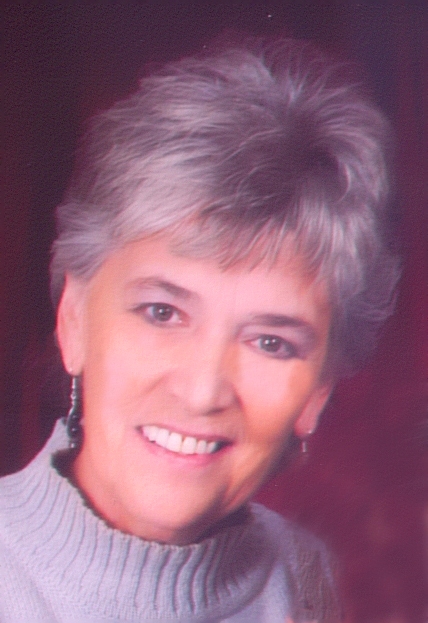
Today, my guest is Sharon Hopkins, author of Killerwatt, Killerfind, and the soon-to-be-released Killertrust. You all met her husband, Bill, last week – together these two are the Deadly Duo. READ THEIR BOOKS, and you’ll know why; between them, they’re showing a respectable body count as per their novels (disclaimer, in case anyone reading is a smart aleck – or a government agent).

So, here’s Sharon:

People often ask me, “How do you come up with your characters?”

My short answer is, “They are all in my head, waiting to get out.” And that’s true—

both the animate and inanimate ones.

When I began getting the idea for my first book, Killerwatt, the character of my protagonist Rhetta McCarter was already rattling around my head, but I had to bring her to life. Before I even began writing the story, I started with a new clean document and began typing everything I knew about Rhetta—her occupation, spouse, pets, birthday, age, height, weight, what she liked to wear, and what her little idiosyncrasies were. I printed out the sheet with her info, and keep it by my laptop for reference. I never count on my memory to remember everything about her. I add to the sheet as every story goes on, and she reveals more about herself to me. I add those facts to my notes.

I do the same for all of the other principal characters in the books, too. Their age, spouses, where they went to school, their education, where they work, what they drive, etc.

Now the trick is how to tell the reader about the characters?

The way I like to do it is by describing actions and through dialog. Dialog gives the reader immediate insight into the character. To dialog, I add mannerisms and actions. No information dumping allowed. I release a little at a time, just enough to cover a point in the story. By the end of the book, the reader knows who she is and what she’s like, but can’t really go to a specific location for all the description.

Now, let’s talk about an inanimate object as a character. In this case, the secondary character, who is her Camaro.

When I put Rhetta behind the wheel of a classic 1979 restored Camaro that she calls Cami, I never realized how popular the car would become with the readers. Rhetta obviously loves her car, and when something bad happened to it in Killerwatt, many readers wrote to me and said they were devastated to read about Cami’s fate. I tell them to read Killerfind, which starts out with a story about Rhetta’s search to replace Cami, and leads to two murders and something exciting concerning Cami.

Cami is now a regular character. The nice thing about inanimate objects is that they can come back to life!

So characters don’t always have to be people. They can be houses, cars, motorcycles, cats, dogs, etc. Just make sure that you, the writer, know as much as you can about the characters when you begin writing about them. And listen and make notes about them when they tell you about themselves.

Thanks, Robin, for inviting me today. I’ve sure enjoyed the visit!

sharon

Sharon is a branch manager for a mortgage office of a Missouri bank. She also owns the original Cami, the 1979 Camaro featured in her books.

She is a member of the Mystery Writers of America, Sisters in Crime, the Southeast Missouri Writers’ Guild, and the Missouri Writers’ Guild. Her short story, DEATH BEE HUMBLE, appeared in the SEMO Writer’s Guild Anthology for 2012, and her newest short story, DEATH TO PONDER will be in a mystery anthology this spring.

Her first Rhetta McCarter book, KILLERWATT was nominated for a 2011 Lovey award for Best First Novel and was a finalist in the 2012 Indie Excellence Awards. Her second book, KILLERFIND, was released in July, 2012.

Besides writing, Sharon’s hobbies include painting, fishing, photography, flower gardening, and restoring muscle cars with her son, Jeff.

Sharon also spent 30 years as an Appaloosa Horse Club judge, where she was privileged to judge all over the US, Canada, Mexico and Europe.

She lives on the family compound near Marble Hill, Missouri with her husband, Bill, next door to her son, Jeff, his wife, Wendy and her grandson, Dylan, plus two dogs, one cat and assorted second generation Camaros.

Her books, KILLERWATT and KILLERFIND can be found on http://www.amazon.com, or directly from her home page at www.sharonwoodshopkins.com.

The third book, KILLERTRUST, will be available in 2013.

Signed copies are available at All on the Same Page Bookstore, 11052 Olive Blvd., Creve Coeur, Missouri.