Seven Dirty Words


Since the release date of Seven Dirty Words is just around the corner – four days from this morning, to be exact – I’m going to take this opportunity to first tell you all ways you can get your own copy of this great romantic read:

You can enter the giveaway over at Goodreads – nearly 300 other people have done it!

Goodreads Book Giveaway

Seven Dirty Words by Charlotte V. Howard

Seven Dirty Words

by Charlotte V. Howard

Giveaway ends January 29, 2013.

See the giveaway details at Goodreads.

Enter to win

You can go directly to the publisher’s website – and get an autographed copy.

smallhorse

You can download for Kindle… or Kobo. AND, you can get that signed too, very soon, through Authorgraph!

You can go to Amazon or Amazon UK for a paperback.

And, by Monday, you can download for your Nook!

Of course, there’s a link on Charlotte’s website too….

Moving right along, let me tell how Seven Dirty Words came to be a book:

I met Charlotte several years ago, online of course, where we both wrote non-fiction articles for a certain unnamed website. Last fall, when I was slightly bored one day, I decided to start a publishing house. For my own two books, of course, and why yes, I will name them, thankyouverymuch: REDUCED and REUSED, but also for other authors – authors who may or may not be able or interested in self-publishing but who were possibly having trouble finding an agent or traditional publisher. And as I’ve mentioned before, RHP is a traditional publisher.

So, never one to let grass grow under my feet, I put out a call for submissions. Initially, I received two: one from a gentleman in Oklahoma, and Charlotte’s manuscript. Now, the gentleman from Oklahoma called me after receiving my email. I had made some suggestions/corrections and told him I’d be happy to look at it again after he made those changes. It was a good story, but needed some work. Two beta readers had gone over it, and I based the requests on their comments.

And there was Charlotte’s book. Seven Dirty Words. Our beta readers really liked this one! The only issue was to tone down some of the “Britishisms.” I have no idea if that’s a real word, but I like it. As you know, English is not always English on both sides of the pond – and that’s all I’m going to say about that!

At any rate, Charlotte was awesome about all this – she listened to what I had to say, made a few changes, and presto: we had a workable manuscript which went off promptly to editing. I will say that our  editor was a little flummoxed over a few of those “Britishisms” which remained, the ones that I felt were essential to the story; it does, after all, take place in the UK. Shannon Yarbrough was busy during this time designing the amazing cover…. And then we had a book. To sell.

Charlotte is an absolute joy to work with – she follows through almost immediately on any marketing ideas and suggestions that I throw her direction. This is particularly remarkable when you consider the time zone differences – which I frequently forget about – and the fact that I’m very off-the-cuff about such things: when I think of them, I shoot off an email before I forget!

Besides selling and promoting Seven Dirty Words, though, I really do want to thank Charlotte for taking a chance on a new publishing house – and for helping me learn A LOT MORE about this business. And I’m really glad that I got her on board with RHP before anyone else came along and snatched up her very talented writing!
Why Are We Writing?


Today’s guest post comes from Conny Manero, a writer friend of mine from our online article-writing days. She has published three books, and is working on several other manuscripts.

From Conny:

“Why are we writing?

“With the birth of self-publishing companies, a lot of people reached for pen and paper, or fired up their computer and started writing stories.

“Self-publishing companies make it easy.  Just upload the manuscript, pick a cover design and you’re done.  But then what?  Now that the book is published, who will buy it?

“Not only do mainstream authors have a proper publisher who has contracts with bookstores where they can offload hundreds of copies, those publishers have a marketing department and an unlimited budget for promoting an author’s latest work and sending out complimentary copies.

“In addition to posters and ads, the marketing department organizes book signings and appearances on radio and TV.

“Self-published authors have none of that.  If they want to send out complimentary copies, they have to pay for them.  Press releases to radio and TV are a waste of time.  As for getting books into bookstores… I tried that once.

“I approached the store manager of the book chain Indigo.  I told him about my book and showed him a copy.  When I asked for shelf space and a book signing he was all for it.  Everything looked promising until he asked, “Who is your publisher?”  When I told him the book was self-published, his enthusiasm went from hot to cold in a matter of seconds.

“Truth is, no matter how popular self-publishing has become, for bookstores it’s still a dirty word.

“So why are we writing?  If you’re writing for the fun… go for it.  If you’re writing because it’s therapeutic… good idea.  If you’re writing in the hopes of catching a mainstream publisher’s eye or getting your book in a book store… your chances are slim to none.

“Part of the problem is that some self-published books are not worth the paper they’re printed on – they’re not just bad, they’re very bad.  Some are littered with typos, some have bad grammar, while some are factually incorrect, or just poorly written.

“Take Maggie’s book for instance.  She wrote about the poor starving children of Africa.  When I asked her about her experiences in Africa, she told me she’s never set foot out of Ohio.  Her book was purely research.

“Why do some people think they can get away with that?  I suppose some clever soul is going to come up with the idea of writing about climbing Mount Everest or crossing Niagara Falls, just because such adventures can be researched online.

“Do I have a mainstream publisher for my books?  No I don’t, I self-published too.  Are my books any good?  Who knows?  Family and friends say yes, but they’re not exactly reliable critics.  Would you tell you tell someone you know that his/her work stinks?  Of course not.  Not only do proper manners forbid such honesty, you wouldn’t want to hurt someone’s feelings.  Besides, what’s good for the goose is not always good for the gander.

“Perhaps what some writers need are good editors.  Have you ever noticed how published authors always thank their editor?  That’s because they make the original story better.  Who knows what the original manuscript looked like?  Maybe those famous authors write no better than you and I, but their publisher can afford to hire a talented editor.

“Why are we writing?  I no longer know.”

I wanted to add a bit to Conny’s contribution today. She makes some very good points about self-publishing, especially when it comes to the attitudes of some booksellers. However, chain stores such Indigo or B&N frequently cannot host events or stock SP books for one reason: most SP books are print-on-demand, or POD, and aren’t in the registers of most chain stores. That means that, no matter how many books you might sell at an event, the store has no way to pay your for those books. One possibility is by taking payment yourself, which might require some extra accounting and work on your part; some stores might work with you, in that case.

Another thing Conny mentioned was traditional publishers. The Big Six, or Five, may unload “hundreds of copies” through big chain stores, but most indie booksellers purchase 3-4 copies of a book through a distributor such as Ingram or Baker and Taylor. And, unless your name is Patterson or King, they aren’t going to spend money on ANY author, new or established. Sure, they have contacts, and their names alone can open some doors, but they’re downsizing just like everyone else.

However, there are traditional publishers who aren’t part of the Big Five – small presses, like RHP, who do pay standard royalties (or higher) and who do a lot of promotion. The author is also expected to do promotion and marketing, but many, many authors with the Big Five do that too.

Whether an author goes the SP route or obtains a contract with any traditional publisher, there’s a lot of work to be done for everyone. The first thing, of course, is to make sure you have a top-notch product: your book. Then you have to put yourself out there, take the good with the bad, and keep working. Often, the writing turns out to have been the “easy” part.


conny

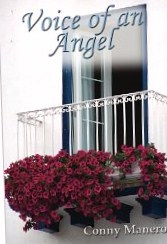
Conny Manero lives in Toronto, Canada, with her son and four shelter cats. She is the author of two novels, “Waiting for Silverbird” and “Voice of an Angel,” and two children’s books, “Kitten Diaries” and “Debbie” (unpublished).  She has contributed to publications such as Chicken Soup for the Soul, Elite Magazine and GreenPrints.  She is also a freelance writer for websites such as Life Answers and Daily Glow.

When not writing, Conny is an active fundraiser for the Toronto Cat Rescue and a league and tournament player in ten-pin bowling.

You can read more at Conny’s blog.