Reduced—The Series


I seldom blog about my own books—I don’t know why, it just doesn’t happen. Maybe because they’re all listed on the sidebar here . . .

Well, today, I am!
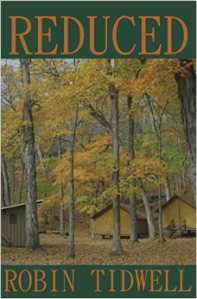
Reduced cover 

REDUCED: FREE on Kindle this week!

A devastating biological agent is about to be released, to be tested in remote areas. Rumor has it, though, that there is more to this than meets the eye. One group makes plans to hide out, and survive, in case that rumor proves to be truth. Meeting at an abandoned summer camp near St. Louis, Missouri, a dozen old friends gather after the alarm is raised.

Life becomes more precious, more tenuous, as time passes. Government controls tighten, people are herded into the city . . . or killed. Towns are obliterated. And soon, the enemy agenda becomes obvious.

Abby, like the rest, has special skills—each member of the group was chosen not only because of past ties, but also for their unique training and abilities. She will come face-to-face with death, bear the responsibility for a young girl, and endure the severing of childhood relationships in the most terrible way imaginable.

From mere concealment to reconnaissance to aiding a rebellion, where will it end? Will the entire region be decimated, and who will be left alive to know?

So yes, FREE! The second and third books, REUSED and RECYCLED, are available now, and the fourth, REPEAT, will be out in March!


Writer Wednesday—How to Write a Book


Here you go, the handy dandy guide to writing that book you were always planning:

  1. Have a story
  2. Write it down
  3. Check for plot consistency
  4. Check for mechanical errors
  5. Let someone read it.
  6. Make any necessary changes

Simple, right?

Everyone has a story, their own story; some people come up with other stories—which are really just big what-ifs. What if this happened, or that, and how would it progress, and how would it end? Ideas can come from anywhere at all: dreams, real-life occurrences, and just plain daydreaming.

Now for the hard part—writing it down. You don’t have to write a certain number of words each day, and you don’t have to write every day, and you don’t have to write at the same time every day. However, if you skip more than a day or two, you run the risk of getting out of the habit of writing, and while that won’t necessarily preclude your finishing the book, it will extend the time it takes.

You might want to also make notes, or a timeline, as you go or even before you start.

After you’ve finished, and I don’t care what NaNoWriMo says, a novel is NOT 50K words, it’s almost twice that, at minimum, read it back over again to make sure you wound up all the loose ends and didn’t change someone’s name or description in the middle.

Make sure it’s believeable, as any good story is, and be sure you haven’t inadvertently used some colloquialism or slang term specific to your region, your family, or your business. Historical facts and actual places should, to a point, be accurate insofar as general readership is concerned.

Once you’ve made any changes, read it over again to check for mechanical errors: spelling, punctuation, grammar, etc. Fix them.

Now you can send it to someone to read—or several someones. Make notes of their feedback, and decide if you want to change anything.

There you go—you’re finished. You wrote a book. Congrats!