Everything You Need To Know About Writing What You Don’t Know


Today my guest poster is author Shannon Yarbrough, who’s published three books so far – with a fourth coming out some time this year. Shannon, who is an excellent writer, has also been invaluable to us at All on the Same Page Bookstore, providing us with suggestions and ideas and much-needed moral support.

Especially when we’re searching for a book. A green book.

Without further ado:

There’s an old adage that goes something like: “Write what you know.” I actually agree with that saying somewhat. If a person came up to me and told me they wanted to write a book and they were asking me for advice, I’d probably tell them that for lack of anything better to say. And it was certainly a theme I followed when I started writing my first book twelve years ago.

Since then, I’ve read a lot more. I’ve matured a lot more. I’ve had lots more life experiences. You could say now I know more and could write something much different than I did twelve years ago. And that would be true. I’ve done just that. In fact, I’ve done it twice since then.

But every once in a while, a new idea strikes you that you might like to write about instead. And it’s more than likely you know nothing about that idea and so maybe you avoid it because authors like me gave you bad advice when you were looking for a place to start. Well, I’m here to make amends and tell you that you shouldn’t listen to anyone who tells you to write what you know. That includes me.

So, if you are going to sit down and write a book about something that you know nothing about, how do you do it, you ask? Simple answer: You learn. Now, chances are you might be considering a theme that you really can’t draw experience from by just going out and doing it, right? Let’s say you want to write a murder mystery about a vampire serial killer. Well, you can’t really go out and practice vampirism. And I’d hope you wouldn’t go out and become a serial killer either! If you do, please don’t tell anyone you were following my advice!

But you could study other famous authors who wrote about vampires. I’m sure Anne Rice didn’t know much about vampires in the beginning, but her books are so rich with real life history and intricate details of the worlds in which she put her vampires. So I’m sure she drew those ideas from real life experiences and surroundings. As for the vampires? Maybe she studied other writings, or maybe she just made them up. But if you’ve ever read an Anne Rice book then you get the sense that she knows what she’s writing. She makes you believe, and that is the key to writing a successful book.

Now, I hate research just as much as anyone else does. Even the word research makes me think of those wretched term papers I had to organize on note cards back in high school. So, don’t think of your prep work as being research. Find ways to make it interesting. Like I already said, a good way to start is by reading other books in the genre you want to write in. Read several different authors and then write down what they have in common and what makes each of them different.

If your book is about royalty set in 18th century England but you can’t pack up and go overseas to do your research, seek out history books that cover that time period. Focus on what people wore or how people spoke. Pay attention to what happened in real life history during that time and how it might have affected your characters. As for the holes in between, make them up! Unless you’re writing nonfiction, that’s the reason you have an imagination.

If a particular city or setting is important in your book, go tour that location and take lots of notes. Buy a map and do a walking tour. Eat in local restaurants or visit coffee shops and people watch. Write down what you see or even record conversations you hear. It’s good writing practice, and you never know when you might find something you can use in your book. The point here is that you are absorbing your surroundings. You are making a connection. You are becoming your book.

If you are writing about a cop or a doctor, you might interview a few of them. If your book takes place in the wild, go camping or just go take a hike in the hills. Don’t forget to take along a notebook and pen! The point here is to put yourself in the real life surroundings that you want to write about fictionally.

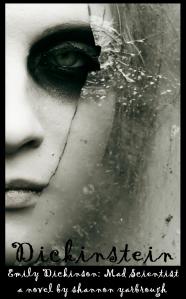
Recently I wrote a book about Emily Dickinson. My knowledge of Emily was extremely limited, but I was determined to center a book around her as a character. I had read a book of her poetry years before, so I sought out other volumes of her work, particularly ones with lengthy introductions that might have provided other information about her. I also bought a coffee table book filled with pictures of her home which I used as inspiration for settings.

All of my other research was done online. You might say that’s not a very reliable source, and that is very true today. Always fact-check your research if those minor details are important to you! I used the EmilyDickinsonMuseum website as a lead source for information and to check facts that I found on other sites. I also emailed the museum on a regular basis to ask questions. By doing so, I developed a nice friendly relationship with an employee of the museum who was happy to answer all of my questions.

Lastly, I printed lots of information from the web to read and use. I highlighted parts I wanted to reference. After just one week, I had filled a folder with great information about Emily. I was now ready to start writing. Sure, I didn’t know all there was to know about Emily and her life in the beginning, but I knew enough to get started. I stopped and did more research along the way. And in just eight weeks, I had a good first draft of the book I set out to write.

My point here is to not get discouraged by doing research. Put your imagination to work when it comes to the details you can’t find in a library. Don’t be afraid to pencil in a few anomalies now and then. After your book is published and a cranky reviewer calls you out for a mistake you made about the type of gloves your 18th century queen is wearing, you can just remind them the book is fiction!

So now you know all you need to know about writing what you don’t know, and if you don’t, then I advise you try Google. Or if you don’t like doing research, then there’s an old adage I’ve heard before that goes something like…
Dickinstein2 (2)

Shannon Yarbrough is the author of three books.  His fourth, Dickenstein: Emily Dickinson ~ Mad Scientist, is due out in 2013. He lives in St. Ann, Missouri.  Find him online at www.shannonyarbrough.com.

Is There Such A Thing As Genre?


Today’s guest post is from Misha Burnett, author of Catskinner’s Book. I’ve already reviewed it on Goodreads, but I’ll tell you again that it’s definitely something amazing!

Misha Burnett:

“Is There Such A Thing As Genre?

“Silly question, right? The Amazon Kindle store lists eighteen separate genres and a total of forty-three sub-genres, and I’m not counting the ones based on age of readership or country of origin.

“Granted, there’s a certain degree of overlap. Under Historical Fiction, there is a category for Romance and under Romance, there’s a category for Historical, for example. Which only makes sense, since Amazon is looking to sell books and they want to make sure that there are plenty of ways for a reader to find a particular type of book.

“But, honestly, what does a genre actually tell you about the book?

“Well, it might tell you the setting, like Western or Epic Fantasy. It might tell you what sort of events happen in the book, like Mystery or Romance. It might tell you that it’s scary (Horror) or funny (Humor). It might tell you what age group it’s written for, or that it’s written for a particular gender or sexual orientation.

“But… there is YA Western Mysteries and Gay Historical Romance and Humorous Science Fiction. There’s the whole class of Literary Fiction, which seems to mean “Fiction That Doesn’t Fit Into Any Other Category.”

“Let’s face it, the whole concept of genre has been defined reactively. Somebody writes a popular book about a trial, and then a lot of other people write books about trials, and then all of a sudden bookstores and libraries need a shelf for all these books about trials and somebody comes up with the name Courtroom Drama to put on the shelf. Presto, a new genre.

“So really, all a genre tells us is that a work is, in some way, similar to something that has come before. Which is handy for marketing people, but can make some of us feel like the unpopular kid who gets picked last for kickball every time.

“Let’s start with an example opening:

“A pair of detectives are called to a crime scene. The victim is lying in bed, naked, his throat torn open. Despite the wound, there is no blood on the bed, or the surroundings, or—forensics indicates—left in the body. Around the room all of the mirrors have been smashed.

“Okay, at this point, the audience is thinking “vampire”, and the knee-jerk reaction is to label it as Horror, but is that really the best fit for the story?

“There are a lot of places the story can go from here—it could be a real vampire (Horror), it could be someone who thinks she is a vampire (Psychological Thriller), it could be someone trying to make it look like a vampire killing to confuse the police (Police Procedural), it could be an alien organism that lives on blood (Science Fiction).

“But suppose we want to mix things up a little?

“Two homicide detectives, Joe and Samantha, are called in to investigate a bloodless corpse. Joe is a cynical street cop who rose through the ranks, Sam is college educated. The two have a running conflict, with Joe seeing Sam as lacking real world experience and Sam seeing Joe as close-minded.

“More bodies surface, and as the case progresses evidence mounts that the killer has more than human abilities. Sam begins to suspect that there are such things as vampires, but they are not supernatural. Instead, she gathers evidence that there is, living alongside human beings, another species that can pass for human, but is a non-human predictor evolved to hunt humans.

“Joe, of course, rejects her theory and does everything he can to dissuade her. At the climax, Sam comes up with incontrovertible evidence that this sub-species is real, at which point Joe reveals that he knows—because he is one of them. They have learned to live among humans quietly, without drawing attention to themselves. The “vampire killer” is a rogue element, one of them who has gone crazy and thinks she’s a “real” vampire. Joe was assigned by his people to cover up the crimes of the rogue vampire, and has been trying this whole time to keep Sam from the truth, to protect her.

“Now that Sam knows too much, he’s going to have to kill her.

“So what is this story? Horror, Science Fiction, Psychological Drama, Police Procedural? Yes, all of the above. Heck, we could even throw in some chemistry between Joe and Sam and add Romance to the mix. (And then we can have a scene where Sam says, “Everything you told me was a lie!” and Joe can reply sadly, “No, not everything…” and there won’t be a dry eye in the house.)

“I don’t think this is outrageously complicated plot, either. Whitley Strieber wrote a number of novels which followed similar lines—The Hunger and The Wolfen, for example, both of which ended up being made into films.

“What’s more, I think that Joe & Sam vs. The Bloodsucker (working title) would be well received by a large audience. Done well, it would be the kind of story that has me staying up late on a school night because I just have to find out what is really going on. There’s plenty of room for tension, some danger, good character chemistry, and a heart wrenching betrayal at the end.

“But how would our hypothetical author market this book? There are a lot of sites for self-published authors to get the word out about their books, but the ones I’ve seen are locked into the old genre model. You have to put a simple label on your work before you can even register it, most of the time.

“One solution is to just pick a genre and stick to it. Say, okay, it’s Horror, and I’m going to list it as Horror everywhere I post it. That’s probably the easiest (it’s what I’ve been doing with my own first novel, Catskinner’s Book—I just call it Science Fiction and leave it at that.) We can always explain more about the book in the description field. The advantage is that someone who is looking for it will find it in the same place on every site—the disadvantage, of course, is that by limiting it to one genre it might never be seen by other readers who would enjoy it, because they’re searching for Crime Fiction instead of Horror.

“Another way is to tailor the genre to the site. If it’s a site that specializes in mysteries, call it a Mystery. On a sci-fi site, call it Science Fiction. It’s not dishonest, exactly, but I wonder how the site administrators would react to knowing that the same book was on different sites as different genres.

“My personal preference would be to leave it blank, but I have found that on sites that allow works to be posted as “unclassified” or “not applicable” those categories are darned tough to just happen across by accident. And who goes looking for “unclassified” novels?

“Of course, one could always try to introduce a new genre. Call it Cryptozoological Detective Fiction and lobby sites to include that in their listing. Some of them probably would (most folks that I have met that are interested in supporting independent authors bend over backwards to be accommodating) but unless we a handful of sequels up our sleeve it’s going to be a darned small listing.

“Here’s the part where I’m supposed to offer the solution and explain how in one simple step we can all get around the problem of genres, and maybe supply a cute little “Escape The Bondage Of Genres!” badge for you to post to your blog.

“Sorry, I’m not real good at following rules. I’d love to be able to offer one, but nothing simple and easy comes to mind. I do think things are changing, and I think the Amazon’s forty-three sub-genres is an indication of that. I suspect that we are moving towards a multi-dimensional classification system, much like Pandora has done for music classification, but we’re a long way from that now.

“I would like to encourage both writers and readers of fiction (and if you’re a writer I hope you are also a reader) to be flexible in your understanding of fiction, to be willing to look in the cracks and think outside the box. That’s where the fun is.”

MishaHeadshot01

Misha Burnett is a self-educated poet and novelist. In August 2012 he released his first novel, Catskinner’s Book, and is currently working on a sequel. He considers his work Speculative Fiction, and draws heavily upon the literary tradition of the New Wave science fiction authors of the 1960s and 1970s, including William Burroughs, Samuel Delany, and Phillip Dick, as well as his own life experience.  He lives and works in Saint Louis, MO.