Introducing Michael Chulsky


Michael Chulsky’s debut novel, The Descending Darkness, will be released next week on September 28. He’s a little bit excited about all this, but he managed to put pen to paper once again and answer a few questions I threw at him:

Q: When did you start writing The Descending Darkness?
I began writing The Descending Darkness when I was sixteen. It was a rough time in my life. I felt really alone. I would have gone crazy (read crazier) if I didn’t have my “imaginary friends” to keep me company. And they did just that when I was writing TDD.

Q: Tell us about the book.
The Descending Darkness follows the story of Shadow and his mission to save the world. However, saving the world isn’t exactly a one-man kind of job. He begins assembling a team of teens, much like himself with special abilities, to assist him. With ten of them on his side, what could go wrong?

Well, just about everything.

If they’re not setting the house on fire or destroying his property, they’re raiding the fridge and making a mess of the place. And when they’re supposed to be training, they’d much rather skip off to the mall.

Unfortunately, no amount of training can prepare them for Maedara. They’ll need to work together in order to defeat her.

Q: Are your characters based on anyone in real life?

Shadow and I share some personality traits. We both have pain in our pasts. We’re also both very awkward. One of the major things in common is that Shadow doesn’t really know how to be a teenager because he was forced to grow up fast, and I felt the same way.

Physically, Ellie (one of the female team members) is the spitting image of my good friend, Daniella.

And Niki (another one of the female team members) is greatly inspired by my best friend of six years of the same name.

I think that many, if not all writers, put a bit of themselves, family, and friends into their characters. One of the major rules I was taught of writing is that authors always write about what they know. And the people who are closest to us often provide the greatest inspiration.

Q: Who or what inspired you to become an author?
I’ve always had a passion for writing. When I was younger, I would fill up entire composition books with poetry and short stories. The biggest sign was when my literature teachers assigned writing prompts or essays; I didn’t groan like the rest of my classmates. ;P

Q: What made you decide to seek out a publisher as opposed to self-publishing?
I wanted to try things traditionally first. I told myself that I would give it a year and if I didn’t find anyone willing to take a shot on my story, I would go down the self-publishing route. And in April, I sent my manuscript to Rocking Horse Publishing and the rest, as they say, is history.

You can pre-order The Descending Darkness here:
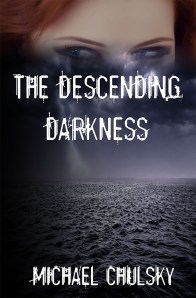
TDDcover

“After going from demon hunter to babysitter, seventeen-year-old SHADOW has truly hit rock bottom. One week he’s slaughtering demons, and the next he has ten super-powered teenagers in his care. Shadow needs them, because without them he can’t hope to defeat his new foe. But he’s never dealt with other teenagers before. He never had a real childhood. He’s always been a loner. Hell, he’s tried the whole having-a-pet thing. It died.

“Shadow’s mission: save the world and ensure his entire team survives the potential apocalypse. If MAEDARA, self-proclaimed fashionista and Queen of Evil, wasn’t trying to rule the world, it’d be cake. Now, not only does Shadow have to deal with teens more concerned with going to the mall than fighting evil, but also a villain who, in his opinion, makes Lady Gaga look like Mother Theresa.”


On Writing – Rachel Gorin


I have to admit, when Robin first mentioned that I would be trading off with Melanie over the weeks during our time as interns writing guest blog posts, I was a bit worried.  I mean, who really cares what I think?  What am I even going to write about?  Then I was kind of excited when I heard about and saw the feedback that I got from my first few blog posts.  I might not be so bad at these blog posts, I thought.  But then, the next few posts weren’t as good.

As I was thinking over what I had written, I thought that maybe I just wasn’t thinking about my audience.  I’m used to either writing to friends and family or for teachers in an academic context, not to professional writers or some of the other people who read Robin’s blog.  If they’re already published and/or have finished all of their schooling, they might not relate to my fear of showing people my own work or the fact that rigorous school experiences might hamper the desire to read for fun.  At least, not at this point, where some of the readers are in different stages of their lives than I am. The first few posts were easily relatable (at least, I personally think so).  The rest, not necessarily as much (feel free to correct me if you want). And I do believe that everyone has something in common with everyone else and can relate to any person on a certain level (though some more than others).  But when you only show a piece of yourself in whatever writing people are reading, they’re either going to like it and relate to it or not.

I’ve also been reading things online about writing that have caught my interest and I’m becoming increasingly more aware of the fact that school is starting soon, so I’ve been thinking about past classes, future classes, etc.  With all of my thoughts about the blog posts and writing and school swirling around in my head, I’ve come to remember and appreciate more all of the little details that contribute to good writing.  Not just grammar or plot, but names of characters and places and other little nuances like that which really need to be thought about – whether consciously or subconsciously – in order to make the piece of writing enjoyable for the reader.  I personally never really thought I was that creative when it came to names.  The piece that I read about names in writing talked about how the reader should be able to pronounce the name – so it can’t be too terribly crazy – and it shouldn’t be too similar to another character’s name in the same piece of writing, because they could be easily mixed up.  I just had this huge reminder that those little details matter.  Incorrect grammar and bad wording drags the quality of writing down, but if the reader can’t follow along or doesn’t have the desire to follow along with the story because of those small details, then how much does the grammar matter?

I think sometimes we get caught up in the little details that are less significant, and we have to keep in mind the big picture and then make sure we address the details that most pertain to the big picture.  Like, will the audience even care about the subject I am addressing?  Am I using language that is easily accessible?  Because really, why bother with those other details if no one is even going to read the writing (I mean, other than for personal growth reasons…)? What we address also depends on our greatest strengths and weaknesses.  If someone’s biggest weakness is grammar and that is the area most detracting from the quality of the writing, then the details to pay attention to would be in the grammar.  In my case, I think I’ve needed to keep my audience more in mind.

I love the fact that I’ve gotten this reminder before school started (it’s not that I didn’t know these things, it’s that I hadn’t thought about them for a while).  After all, I’ll be writing papers for my classes.  Most of all, I think this can apply to everyday life.  Sounds cheesy, I know, but it’s true.  Sometimes we all just need to stop and look at the big picture.  And we need to identify what details we need to focus on for a bit (because we probably should look at all of the details at some point) so that we make the big picture look good. If you’re struggling with anything, no matter what it is, I guarantee you that almost always you will be able to do something little, to change just a tiny detail, to make the situation better.  So maybe we can apply this to our writing and our lives.  Because sometimes we need to put all of the details together, take a step back, and look at the big picture; and sometimes, we need to work on the details because the details can be the things that make something great.